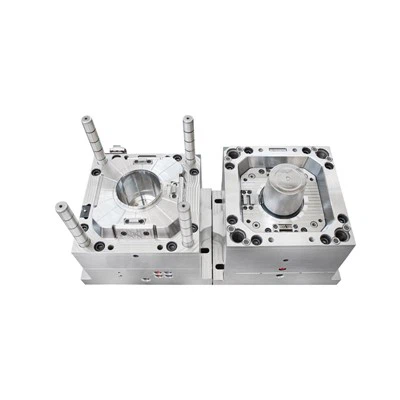
Thin-wall injection mold is widely used in the production of various plastic products because of its high productivity, low labor cost and high degree of automation. However, the design and production of these molds presents some challenges that need to be addressed. In this paper, we will discuss the design difficulties and production considerations of thin wall injection mold.
Design Difficulty
Designing a thin-walled bucket mold can be challenging due to the following factors:
1. Wall Thickness: Because the material must flow at extremely high speeds, the wall thickness of the barrel can affect the injection molding process if it is too thin. Molds must be designed with appropriate thickness to provide a consistent and uniform wall thickness of the product.
2. Cooling: Because the walls of the barrel are thin, there is limited room for heat dissipation, resulting in the material cooling slower than normal. In order to ensure timely, consistent and uniform cooling of plastic materials, mold designers must consider effective cooling systems.
3. Lubrication: Due to the high production speed required for thin-wall molding, molds need to be properly lubricated to prevent the buildup of friction that can cause mold deformation. However, excessive use of lubricants can lead to staining and contamination of the product surface.
Production Considerations
When producing thin-walled buckets using injection molding, several things need to be considered to ensure the quality of the finished product:
1. Material selection: Choosing the right plastic raw material is crucial to the injection molding process. Different plastic materials have different flow and cooling characteristics; Therefore, the choice of materials has a great impact on the quality of the finished product.
2. Injection Pressure: Injection pressure is the key factor to ensure that the plastic is evenly and completely filled in the mold cavity. Set the injection pressure appropriately to avoid problems such as incomplete mold filling, product warping or flashover.
3. Cooling Time: Due to the nature of the thin-wall forming process, the cooling time of the finished product is often the most critical part of the process. The cooling time must be set appropriately to ensure uniform product cooling without shrinkage or deformation.
To sum up, the design and production of thin wall injection mold need to seriously consider the design aspects and production considerations. By choosing the right material, setting the injection pressure correctly, and ensuring the proper cooling time, the production process can be simplified, resulting in a high-quality finished product. With careful planning and execution, the production of thin-walled barrels can become more efficient, economical and high-quality.