Causes and Solutions of Water Ripples in Injection Moulded Thin-Walled Products
Injection molding is a highly versatile and efficient manufacturing process that can easily produce high-quality and complex plastic products. However, due to the inherent characteristics of the process and the materials used, some defects or defects may occur during the production process, such as water ripples in thin-walled products. Water ripple refers to the irregular and wavy texture on the surface or inside of a product, similar to the wavy pattern of water. They can affect the appearance, strength and function of the product and should therefore be addressed and prevented as much as possible. This paper will discuss the causes and solutions of water ripple in thin-wall injection molding products, and provide some suggestions for improving production quality and efficiency.
Causes:
1. Melt temperature: If the melt temperature of the plastic material is too high or too low, it will lead to uneven filling of the mold cavity, resulting in waves or ripples on the surface of the product.
2. Cooling time: If the cooling time of the mold is too short or too long, it will affect the solidification and contraction of the plastic material, resulting in product deformation.
3. Injection speed: If the injection speed is too high or too low, it will cause turbulence or cavitation in the flow of the plastic material, resulting in uneven distribution of thin sections and ripples.
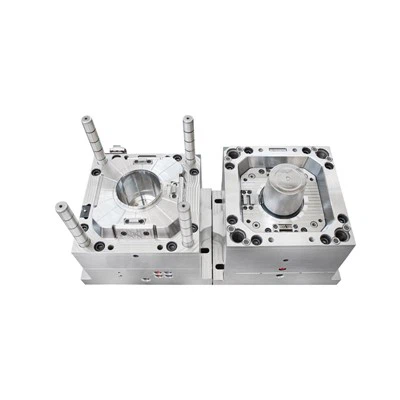
4. Mould design: If the mold design is not optimized, such as having sharp corners, thin edges or varying thickness, it will affect the flow and pressure of the plastic material, resulting in a ripple or overflow of the thin section.
Solutions:
1. According to the specifications and properties of the plastic material, the melt temperature is adjusted to the recommended range of the plastic material, and the heating is stable and uniform throughout the process.
2. According to the geometry and thickness of the product, the heat dissipation time is optimized, and the heat dissipation channel and heat dissipation fan are used to enhance the heat dissipation uniformity.
3. Use suitable equipment and Settings to control the injection speed and pressure, and adjust the flow rate and viscosity of the plastic material by adding lubricants.
4. Use computer aided design (CAD) or simulation software to improve mold design by reducing acute angles, increasing the radius of curvature, and ensuring a smooth transition between consistent thickness and cross-section.
In summary, water ripples are a common problem in thin-walled injection molded products, but they can be overcome by applying the appropriate causes and solutions, and taking a proactive attitude towards the production process and quality control. With the right mindset and approach, we can create plastic products that are more beautiful, practical, and sustainable.