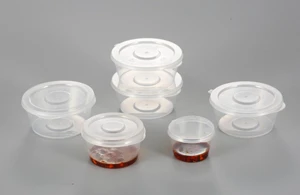
Injection molded thin-wall food containers are widely used because of their light weight, durability, and ease of operation. However, some containers may have water ripples on the surface, which can affect their appearance and quality. In this article, we will explore the causes of this phenomenon and the corresponding solutions.
First of all, the uneven cooling and solidification process is the main reason for the water ripple on the surface of injection molded thin-wall food containers. During injection molding, the plastic material is melted and injected into the mold cavity. After injection, the mold is cooled to solidify the plastic material. If the cooling process is not uniform, some areas will solidified faster than others, causing stress and deformation in the plastic material. As a result, water ripples may appear on the surface of the container.
To solve this problem, the cooling system of the injection molding machine should be optimized to ensure uniform mold temperature. Cooling channels should be evenly arranged and distributed to avoid uneven cooling. The flow of cooling water should be adjusted according to the thickness of the container wall to achieve a consistent cooling effect.
Another reason for the appearance of water ripples is poor mold design. The mold cavity should be designed to ensure the smooth and uniform flow of plastic materials. Any dead or sharp corners should be avoided as they may cause flow marks, weld marks and other defects on the surface. The wall thickness of the container should be uniform to prevent uneven shrinkage during cooling.
To solve this problem, the mold should be designed with an appropriate wall thickness and a smooth surface. The gate design should be optimized to ensure smooth and uniform flow of the plastic material. The radius of the rounded corners should be increased to eliminate any sharp or dead corners. The mold should be maintained and cleaned frequently to prevent any contamination or damage to the surface.
In summary, water ripple on the surface of thin-walled food containers can be prevented by improving the cooling system of injection molding machines and optimizing mold design. A better understanding of the causes of this phenomenon will help manufacturers produce high-quality and visually appealing food containers that meet the needs of customers and create a better environment for all.