


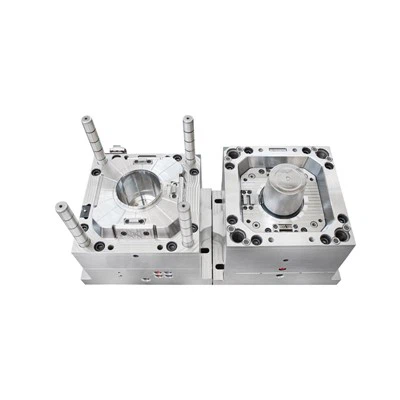
Beverage Cap Mould
Taizhou Zhenke Precision Mold Co., Ltd. is a manufacturer specializing in the production of thin-wall molds, PET preform molds, and packaging molds for medical and high-end daily chemicals. Our company currently has more than 40 senior technical personnel and is a young and dynamic technology-based factory. We provide customers with comprehensive services such as product processing solutions, technical guidance, and after-sales maintenance.
Our Advantages
Advanced Processing Equipment
Zhenke Mold currently has more than 20 sets of various mold steel processing equipment such as CNC machine tools. Mold assembly machines can replace manual assembly of large molds, thereby improving mold quality.
Strict Quality Inspection
We use 7 injection molding machines of various sizes to conduct mold trials to check whether the mold is running well. We will be responsible for any quality issues.
High Return on Investment
The molds we produce adopt a needle valve hot runner system, which helps to accurately control the flow of melt, providing customers with higher production efficiency and lower production costs.
Wide Range of Services
Our company has more than five years of experience in mold design and production. Since its birth, it has provided products and services to more than 30 countries and regions around the world and has more than 100 partners.

A Closure Mould, also known as a closure or cap mold, is a specialized mold used in the manufacturing process of closures or caps for bottles, containers, or other packaging applications. These molds are typically made of high-quality steel and undergo precision machining processes to ensure accuracy and durability.

Beverage Cap Moulds are used to create caps that ensure the integrity, safety, and freshness of various beverages, including carbonated drinks, water, juices, energy drinks, and more. The molds consist of two main components: the core and the cavity. The core forms the inner shape of the cap, while the cavity creates the outer shape.

A Bottle Cap Mould is a plastic mould used to produce bottle caps. It is an efficient way to make caps for bottles. Its main benefit is that it uses less energy and requires low temperatures to plasticize the materials. In addition, it is quick and does not require a pouring point. It also delivers an impressive external appearance to the bottle caps. Another advantage of using a Bottle Cap Mould is that it can be easily replaced if necessary.
Advantages of Using Cap Mould for Injection Molding
Ability to Make Products Consistent within Tolerances
Injection molding advancements have revolutionized Plastic injection molding manufacturers' approach to producing consistent parts. The injection molding process and the machines used can hold tolerances to +/- .125 mm (.005 in). The reason is that Cap Moulds are made to the exact dimensions and shape of the product. If the pieces are small enough, a mold is created that can produce multiple parts with each injection. This results in each piece being 100% exact and uniform. This process thoroughly removes inconsistencies in the manufacturing of parts and components. An inherent advantage of injection molding is that by using molds, there is little to no effort in forming pieces and maintaining tolerances, lowering injection mold costs.
Increased Production of Parts
In the past, machines would stamp out metal parts, or humans would manually make components using templates. Not only did consistency suffer, but so did productivity. A machine producing a single piece or a human making a part one by one is labor intensive and, therefore, expensive. A significant advantage of injection molding is increased productivity with less human work resulting in lower injection mold costs. Plastic injection molding manufacturers' can mass-produce parts and pieces. These components are made with 100% accuracy in one pass by simply injecting material into the Cap Moulds and allowing the required cooling time. Other processes like CNC machining and 3D printing require more time and expertise.
Compatible with Many Materials and Colors
Plastic injection molding manufacturers' are no longer limited to the materials and colors available to produce products. It is estimated to be over 18,000 different materials available that are compatible with the injection molding process. When it comes to colors, almost every color is available. This allows for great flexibility for plastic injection molding manufacturers.
Low Labor Costs
Yet another advantage of injection molding with Cap Moulds is lower labor costs. Plastic injection molding manufacturers use mostly machines to mass produce parts and pieces. The only human labor required is supervision and staff to perform quality checks. This is another clear advantage for plastic injection molding manufacturers as the less staffing, the lower the injection mold costs.
Application of Cap Mould

Beverage Industry
Cap molds are extensively used in the production of bottle caps for carbonated drinks, water bottles, juices, energy drinks, and other beverages.
Pharmaceutical Industry
Cap molds are employed to manufacture caps for pharmaceutical bottles, ensuring the integrity and safety of medications.
Food Industry
Cap molds are used in the production of caps for food containers, such as condiments, sauces, dressings, and dairy products.
Household and Cleaning Products
Cap molds are employed to produce caps for household cleaning products, detergents, and other household items.
Common Compatible Materials of Cap Mould
Polypropylene (PP)
Polypropylene is a common plastic in use in many industries, especially within commercial food applications due to its food-safe nature and for toys because of its affordability. PP does not perform as well in cold applications, but it does provide excellent hot water resistance for easy washing and sanitizing because of its high melting point. PP is not a very dense material.
Polyethylene (PE)
Sometimes referred to as high-density polyethylene, HDPE is highly resistant to both chemical exposure and temperature extremes. HDPE melts and molds very easily with excellent fidelity. HDPE is also well-known for how easy it is to recycle it. Many products made using injection molding use plastics such as HDPE.
Low-Density Polyethylene (LDPE)
LDPE provides many of the benefits of PE/HDPE, but it is less stiff and more ductile. These traits make it well-suited to flexible plastic applications: consumers most commonly encounter LDPE in plastic bags or consumer-grade plastic water bottles. Like PE, it is easy to mold and cost-effective for appropriate projects.
Injection Molding Process for Bottle Caps
Clamp the Mold Based on the Tonnage Requirement
After completing the mold for the plastic bottle cap design, you will need to clamp the mold according to the tonnage requirement of your machine, which will allow you to connect the feeding system with the mold. Be sure to follow the tonnage requirement to ensure that your mold will hold its place during the production period.
Feeding the Plastic Materials into the Mold
Next, it's time for you to feed the plastic materials into the mold. You will need to do this before starting the injection molding operation to ensure that the plastic materials will be ready when you start the production operation.
Using the Extrusion Mechanism
For plastic bottle cap production, you will need to use the extrusion mechanism, as this is the mechanism that works best to produce tube-shaped products. With the extrusion mechanism, you can create plastic bottle caps that will have the best design, along with the threading system inside the cap.
Cooling Process of the Injection-Molded Plastics
Now, the extrusion process will be complete, and the injection-molded bottle caps will need to cool down before you can eject them from the mold. Depending on various factors, you will need to wait for different cool-down times for the plastic bottle caps.
Ejection of the Bottle Caps from the Mold
Now, it's time to remove the injection-molded caps from the mold cavities. The mold will be able to handle thousands of production cycles, so you can repeat the process again as needed.
Components of Cap Mould
Cavity and Core Components
Molding components consist of a core and a cavity. The core forms the products' internal surface, and the cavity forms the products' external surface. The molding components constituting a product's external shape are called concave die (also known as female mold). Those constituting a product's internal shape (like a hole, groove, etc.) are called core or terrace die (also known as male mold). For designing molding components, the cavity's overall structure should be decided first according to the plastic's properties, the product's geometric shape, dimensional tolerance, and operating requirements.
Mold Lock Unit
This is a clamping device composed of multiple plate movements that is used to secure the mold. The device's functions include:
● A fixed fixing plate holds the fixed (casting) mold half or, in cold chamber machines, holds the shot assembly (casting chamber and shot sleeve).
● A movable fixing plate holds the movable (ejector) mold half.
● Guide columns hold the die locking force created by the locking device, as well as guide the movable fixing plate.
Side-Action Mechanism
Some plastic products have undercuts or side holes. Before being demolded, they need side parting to pull the outside core first. There are two side-action systems:
● Perfect fit action (backup), which includes all actions that attempt to hold the core position by making components fit exactly.
● Compression fit action (zero movement), which includes all actions that compress the core into position by applying and maintaining a high set force before, during, and after injection.
Injection molding machines in the plastic processing industry have to work continuously for long hours to enable contVenting: Every molding process expels gas during the melting process. Vents provide escape hatches. They are groove-shape gas outlets made on mold. Without venting, the final products will have porosity, plate marks, and short shots.
Gating
Gating is used for a variety of purposes, including controlling material flow speed and avoiding backflow while injecting. Usually, gate section shape is rectangular or circular. But the design for shape, size, and position of the gate depends on plastic properties, structures, product dimensions, and sizes.
Ejector Pins
These are used to remove parts from molds. There are two types of ejector pins: straight and shoulder. Specific pin requirements are determined by a product's structural position.
Guide Bushings
The role of the guide device of the injection mold is to guide the upper mold and the lower mold to match in the correct position.
Cooling System
Adequate mold temperature control is essential for consistent molding. Molded hot plastic is cooled using cooling channels that allow conduction. Working fluid is typically water, although oil can be used in high-temperature applications. Injection mold cooling dissipates the heat of the molding process quickly and uniformly. Fast cooling is necessary to obtain economical production and uniform cooling is required for product quality. The layout of the cooling circuit warrants close attention especially because cooling typically accounts for two-thirds of the injection molding cycle time.
Hot Runner Systems
A term used in injection molding that refers to the system of parts that are physically heated. Hot runner molds consist of two plates that are heated with a manifold system. The manifold helps maintain a consistent temperature by keeping the molten thermoplastic in the runners at the same temperature as the heating cylinder. The heated runners deliver the molten plastic to nozzles that fill the core mold to form the final part. There are several types of hot runner systems. In general, however, they fall into two main categories: externally heated and internally heated. The externally heated systems are well suited to polymers that are sensitive to thermal variations. Internally heated systems offer better flow control.
Tips for Using Cap Mould
Check the Mold Running Without Any Load.
After the mold is installed on the injection molding machine, run it with any other loading first. Observe the following points:
whether the movement of each part is flexible
whether there is any abnormal phenomenon
whether the ejection stroke and opening stroke are in place
whether the parting surface is tightly matched when the mold is closed
whether the pressure plate screw is tightened.
Maintain the Mold at a Normal Temperature.
When the mold is in use, it is necessary to maintain the normal temperature. Working at the normal temperature can prolong the service life of the mold.
Regularly Check the Sliding Parts on the Mold.
The sliding parts on the mold, such as guide posts, back pins, push rods, cores, etc., should be observed at any time. What's more, they should be checked regularly, scrubbed and filled with lubricating grease at the right time, especially the temperature is high. Add oil at least twice per shift to ensure that these sliding parts move flexibly and prevent tightness.
Make Sure the Cavity is Clean.
Before each mold clamping, you should pay attention to whether the cavity is cleaned. And no residual products or any other foreign objects are allowed to remain. It is strictly forbidden to use hard tools during cleaning to prevent damage to the surface of the cavity.
Control the Surface Roughness at a Right Point.
Molds with special requirements on the surface of the cavity, the surface roughness Ra is less than or equal to 0.2cm. It absolutely can not be wiped by hand or cotton silk. We can use compressed air to blow, or use high-grade napkins and high-grade absorbent cotton dipped in alcohol to gently wipe.
The Surface of the Cavity Should be Cleaned Regularly.
During the molding process of the injection mold, low-molecular compounds will often decompose to corrode the mold cavity. And that makes the bright cavity surface gradually become dull and degrading the quality of the product. So it needs to be scrubbed regularly. We can use alcohol or ketone preparations and then blow dry in time.
Do the Anti-Rust Treatment for Cavity and Keep the Mold Clean.
When requiring a temporary shutdown, the mold should be closed to prevent the cavity and core from being exposed to prevent accidental damage. The shutdown time is expected to exceed 24 hours. And the surface of the cavity and core should be sprayed with anti-rust oil or release agent, especially in humid areas and rainy seasons. Even if the time is short, anti-rust treatment should be done. The water vapor in the air will reduce the surface quality of the mold cavity and the surface quality of the product. When the mold is used again, the oil on the mold should be removed and wiped clean before use. The cleaning compressed air required for the mirror surface is blown dry and then dried with hot air. Otherwise it will ooze out during molding and cause defects in the product.
Do Something to Prolong the Service Life of the Cooling Water Runner.
When the mold is stop production, compressed air should be used to immediately remove the water in the cooling water runner. Then, put a small amount of oil into the entrance of the runner. Next, blow with compressed air to make all cooling runner covered with a layer of anti-rust oil.
Inspect the Operating Molds.
If you hear abnormal noise from the mold or other abnormal conditions during production, you should stop the machine immediately for inspection. The mold maintenance personnel shall conduct patrolling inspections of the molds in the workshop that are operating normally. If any abnormalities are found, they shall be dealt with in time.
Record the Mold Information in Detail.
When the mold has completed the production quantity and needs to be removed from the machine to replace other molds, the mold cavity should be coated with anti-rust agent. Then, send the mold and its accessories to the mold maintenance staff, and attach the last qualified product as a sample. In addition, a list of mold usage should be submitted to fill in the details.
Factors to Consider Before Choosing a Cap Mould
High Temperature Performance
The material of the plastic bottle cap mold should have high anti-tempering stability to ensure that the mold has high hardness and strength at the working temperature.
Corrosion Resistance
When some plastic bottle cap molds are working, due to the presence of elements such as chlorine and fluorine in the plastic, they will separate and resolve strong corrosive gases such as HCI and HF after heating, which will erode the surface of the mold cavity and cause enlargement Its surface roughness exacerbates wear failure.
Fatigue Fracture Performance
In the working process of the plastic bottle cap mold, because it is under the long-term action of cyclic stress, it may cause fatigue fracture in the long run.
Resistance to Cold and Heat Fatigue
some plastic bottle cap molds will be in a state of repeated heating and cooling during the working process, and the effect of tension and pressure on the cavity surface will cause the mold to fail. Therefore, this type of mold must have high resistance to cold and heat fatigue.
Our Factory
Zhenke Mold is a company that can manufacture precision molds and has many years of experience in mold design and production. 23,000 square meters of construction area and advanced equipment enable our factory to quickly create value for customers.


Ultimate FAQ Guide to Cap Mould
Q: Is Cap Mold dimensionally stable?
Q: How to choose the manufacturer of Cap Mold?
Q: Why is Cap Mold used for injection molding?
Q: Is Cap Mold versatile?
Q: Why is Cap Mold important?
Q: What are the types of plastic used to produce bottle caps?
● PET (polyethylene terephthalate, #1), which is strong and lightweight and often used for water bottle / soft drink lids
● HDPE (high-density polyethylene, #2), which is tough, stiff, but still lightweight
● LDPE (low-density polyethylene, #4), which is flexible and has excellent impact strength
● PP (polypropylene, #5), which is hard, rugged, and durable and commonly used for bottle caps of all types
However, other plastics may be used. Because of the wide use of bottle caps, using recyclable materials is the responsible thing to do. The material chosen for the bottle cap must take into account characteristics such as how long it will be used (e.g., a bottle cap for a disposable water bottle will not need to be as rugged as one for a prescription bottle intended to last for a month or longer), what type of media is involved (liquid, powder), and similar considerations. Also note that all materials used for bottle caps that will come into contact with pharmaceuticals, food, or drink will need to be food grade polymers.
Q: What are the moulding processes for plastic bottle caps?
Q: What types of caps can be produced using cap molds
Q: How to select plastic bottle cap mold materials?
Q: Can cap molds produce caps with branding elements?
Q: What are the components of a mold?
Q: What type of steel is used for molds?
For molding materials that do not contain abrasives like glass fibers or corrosive ingredients, P-20 steel is the most common choice. But with smaller tools for high-volume production, hardened tool steels are always a good option to prolong the tool life with reduced maintenance.
Q: What industries use cap molds?
Q: Can cap molds be customized?
Q: Can cap molds be used with different types of plastic materials?
Hot Tags: beverage cap mould, China beverage cap mould manufacturers, suppliers, factory, Round Container Mold, Storage Container Mold, Plastic Fork Mould, Bucket Mould, Coffee Capsule Mold, Mineral Water Preform Mould
Previous
No InformationNext
Closure MouldYou Might Also Like




Send Inquiry